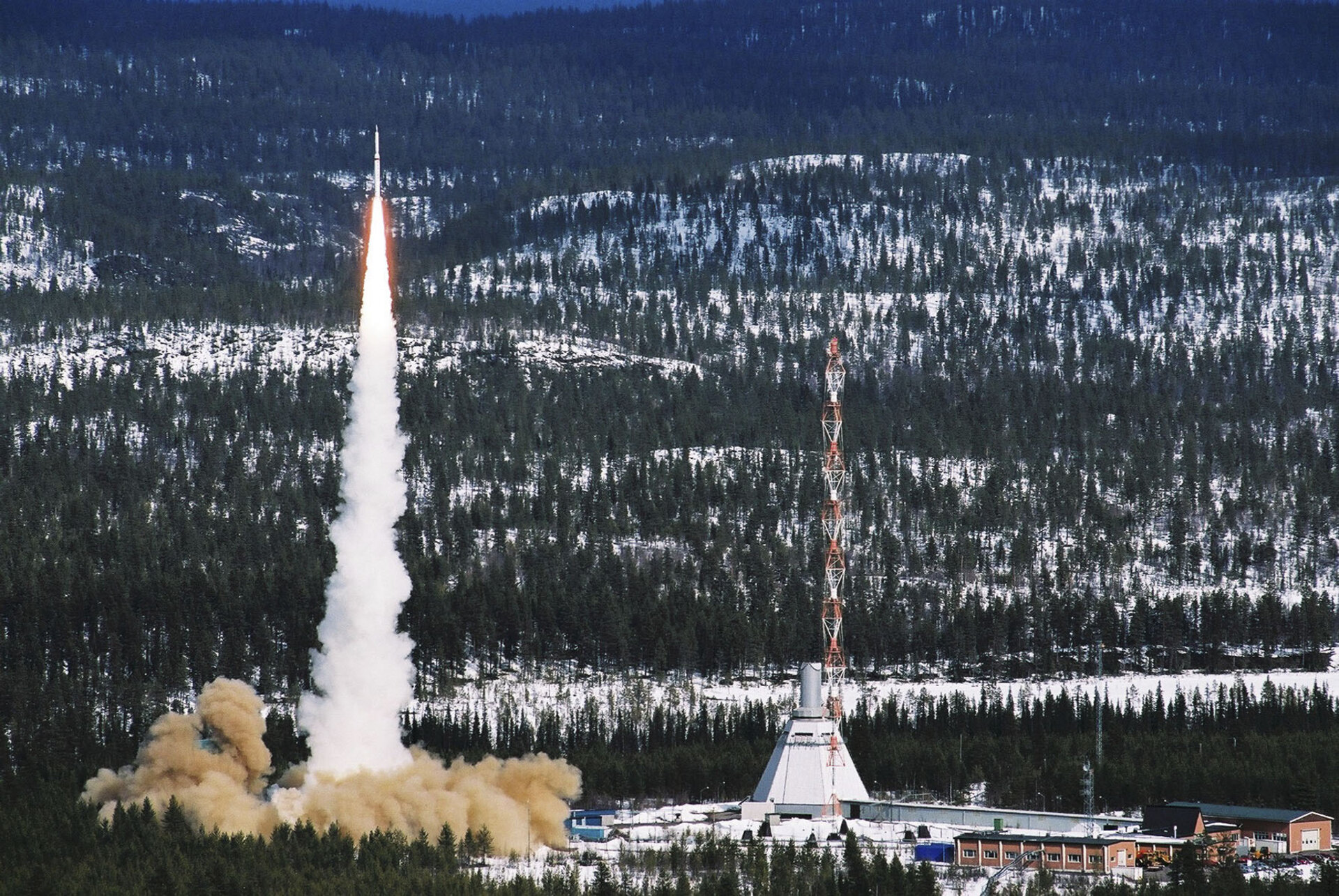
©ESA/ESRANGE/Lars Thulin
What is REXUS/BEXUS?
REXUS (Rocket Experiments for University Students) and BEXUS (Balloon Experiments for University Students) are European programs that provide students with the opportunity to design, build, and fly scientific experiments on sounding rockets and high-altitude balloons. These platforms allow students to conduct research in microgravity and near-space environments, gaining hands-on experience in aerospace engineering and scientific experimentation.
The REXUS/BEXUS program is a collaboration between the German Aerospace Center (DLR) and the Swedish National Space Agency (SNSA), with support from the European Space Agency (ESA). Each year, selected student teams from universities across Europe are given the chance to fly their experiments on either a sounding rocket or a high-altitude balloon, providing invaluable experience in project management, engineering design, and scientific research.
Participating in the REXUS/BEXUS program allows students to work on real-world aerospace projects, collaborate with industry professionals, and contribute to scientific advancements in space research. It is an excellent opportunity for aspiring aerospace engineers and scientists to gain practical experience and make significant contributions to the field of space exploration.
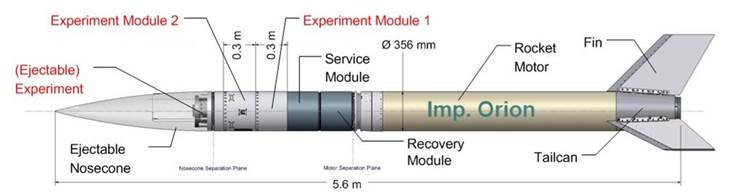
REXUS experiments are launched on an unguided, spin-stabilised rocket powered by an
Improved Orion Motor with 290 kg of solid propellant.
It is capable of taking 40 kg of student experiment modules to an altitude of approximately 90 km.
The vehicle has a length of approx. 5.6 m and a body diameter of 35.6 cm.
Aether's Participation in REXUS/BEXUS
Aether is proud to be part of the REXUS/BEXUS cycle 17, with a spot in REXUS rocket 37 for our Thermal Re-entry eXperiment (T-ReX). Our team has been allocated a space in the nosecone at the very top of the rocket, which is ideal for our 3U CubeSat that cannot fit in the other payload areas.
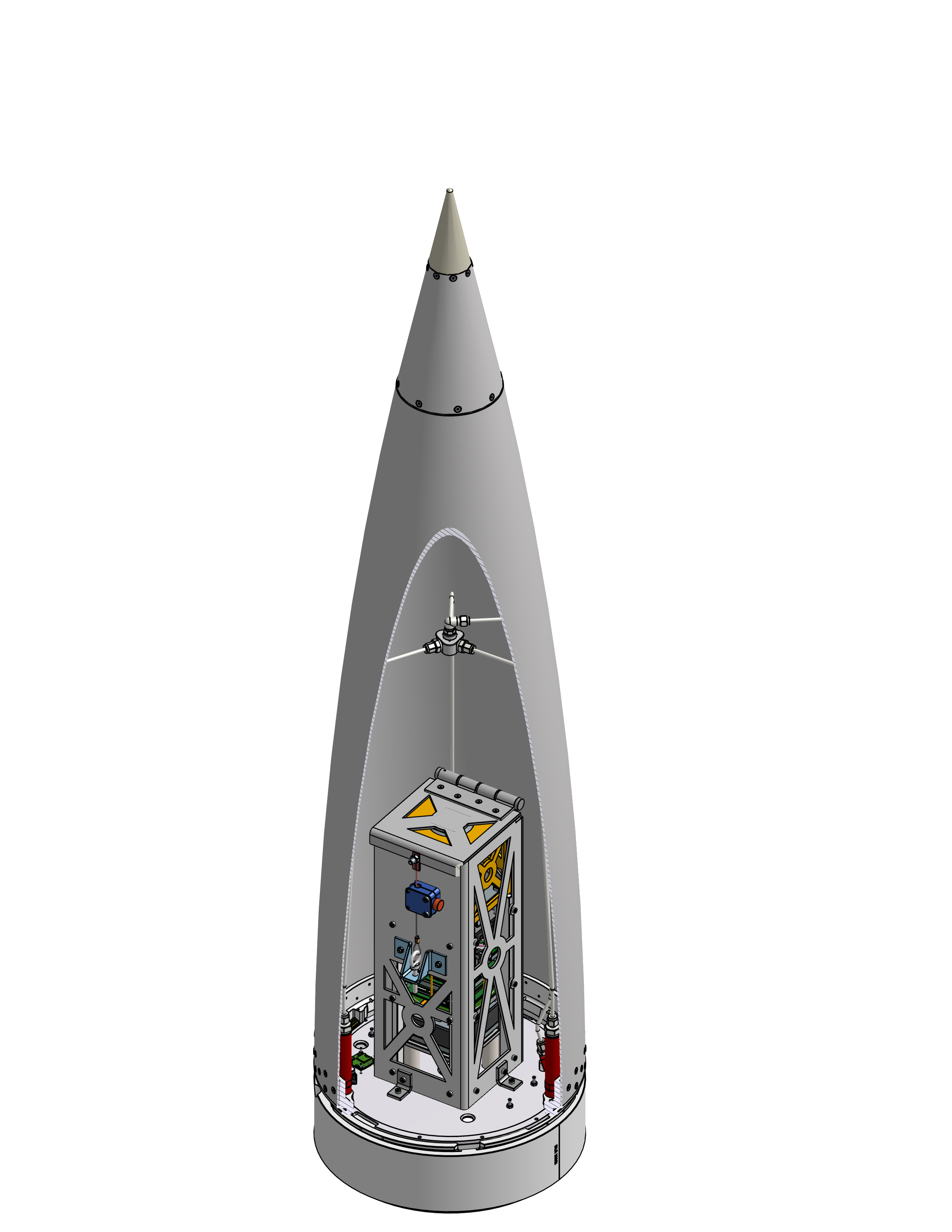
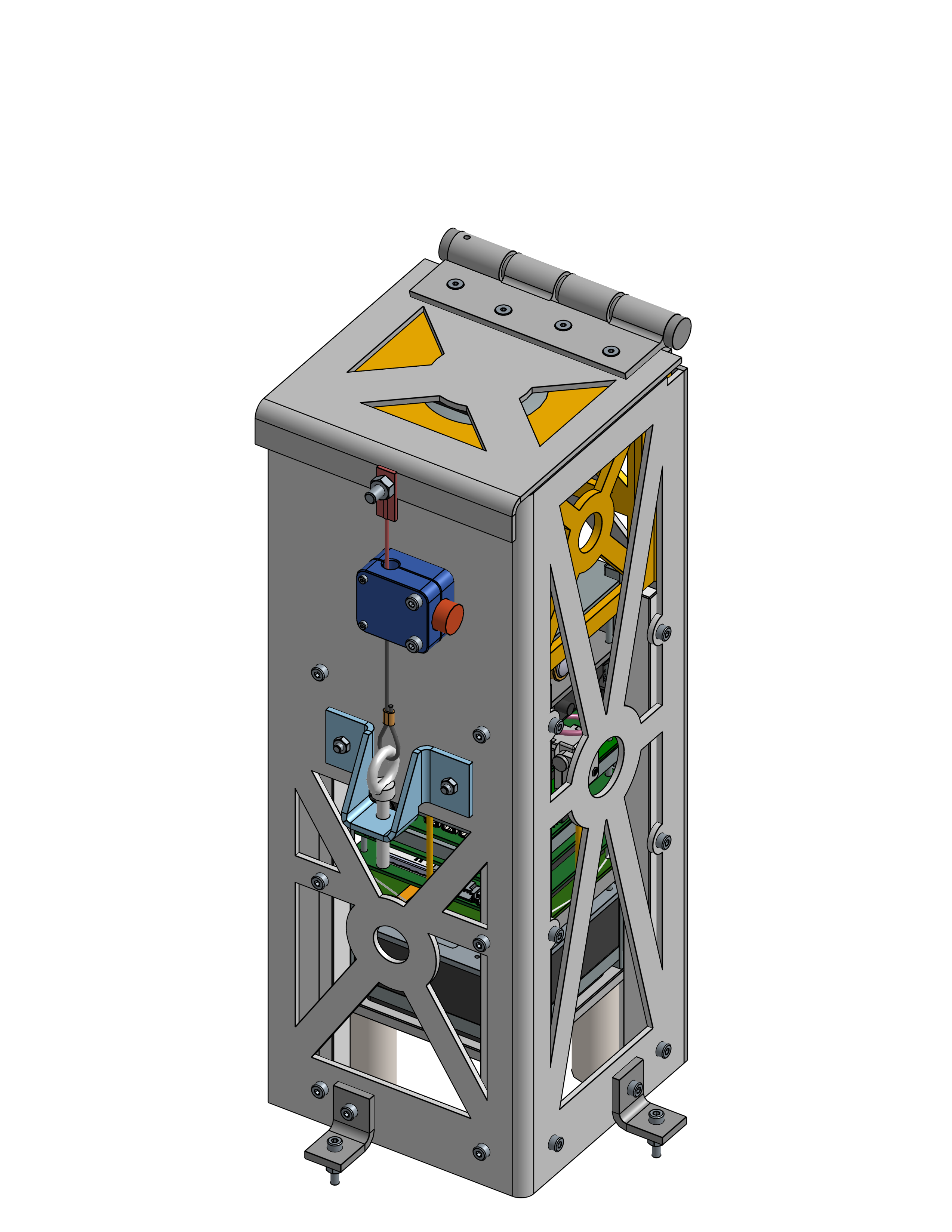
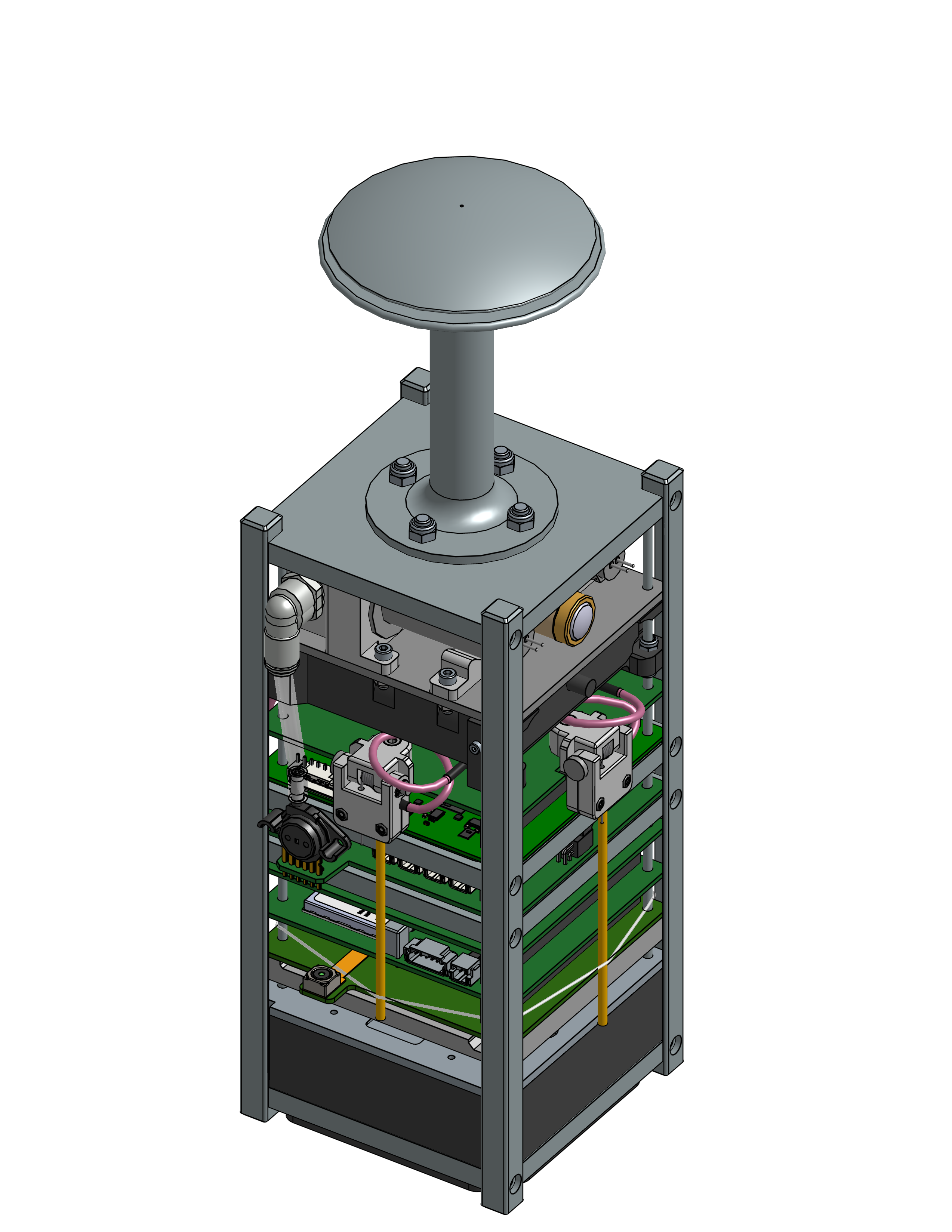
The left most image shows the whole assembly inside the nosecone of the rocket, the middle image shows the ejection system and the right image shows our CubeSat.
During the flight, our CubeSat will eject near apogee, deploy its antennas, deploy its inflatable heatshield, and finally deploy a parachute. The rocket is planned to launch in March of 2027 from Esrange Space Center in Sweden, reaching an apogee of around 90km. During the flight, we will test our whole CubeSat with at the forefront our inflatable heatshield technology, and we will also collect scientific measurements related to re-entry physics.
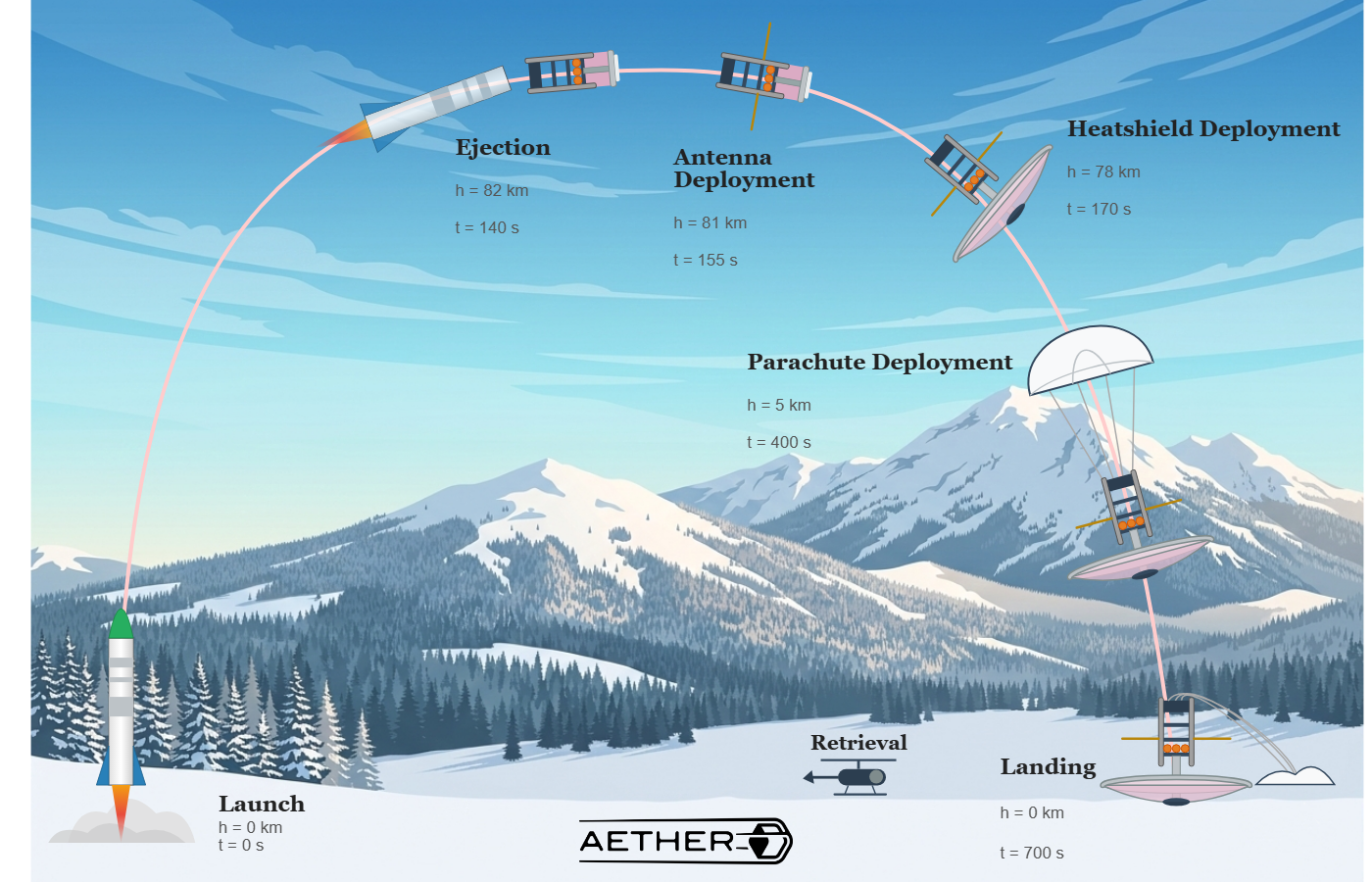
Participating in the REXUS/BEXUS program is a significant milestone for Aether, as it allows us to test our technology in a real-world space environment, gather valuable data that will contribute to the advancement of re-entry technology and build a strong heritage for our team. We are excited to be part of this program and look forward to the launch and the insights we will gain from this experience.